


How MHIEC turns waste into opportunity

At around 850 grams per person per day, Japan’s per capita waste generation is among the lowest in the developed world, about a third of the level in the United States and only just above the global average.
Even so, waste management is an expensive business in this country. The Japanese government spends around ¥2.3 trillion (some $15 billion) annually on municipal solid waste disposal. On top of that come the costs of wastewater treatment, the management of disaster-related waste and investment in recycling. Meanwhile, the private sector deals with commercial and industrial waste. The entire market is probably worth around $50 billion a year.
To deal with all this garbage as efficiently and environmentally responsibly as possible, Japan has long focused on incineration, achieving one of the highest rates in the world: more than 70% of all municipal solid waste is disposed of this way, while a fifth is recycled and only 8% goes to landfill. In the US by comparison, landfill still accounts for more than half, while the global average is 50-70%.
As a result, Japan has more than 1,000 incinerators operating nationwide and while that number has dropped by 40% over the last 25 years, capacity has actually increased as smaller facilities in rural areas have been replaced by larger plants near population centers – reflecting the need to increase efficiency but also demographic changes.
Building on solid foundations
Designing, building and operating these modern waste-to-energy plants is the core business of Mitsubishi Heavy Industries Environmental & Chemical Engineering (MHIEC), a business we have specialized in for half a century. In addition, our company constructs sewage sludge treatment plants to process the sludge generated by wastewater treatment; and offers a proprietary system to keep facilities that use lots of sea water, like desalination plants and LNG terminals, free from algae and shellfish.
A modern incinerator is an impressive piece of infrastructure. It combines a high level of automation and minimal staffing with robust environmental measures to reduce the volumes of ash generated by incineration, to treat exhaust gases and to recycle slag. Increasingly, it also uses its waste heat to power its own operations, with any surplus sold to the electricity grid. About 40% of all Japanese incinerators now generate power.
While such plants can take up to five years to construct, they are built to last, with an original lifespan of at least 25 years, that can be extended to 45 years through equipment renewal and diligent maintenance. This is something we generally take care of for our local government customers, with 60-70% of MHIEC’s revenues deriving from operation & maintenance services.
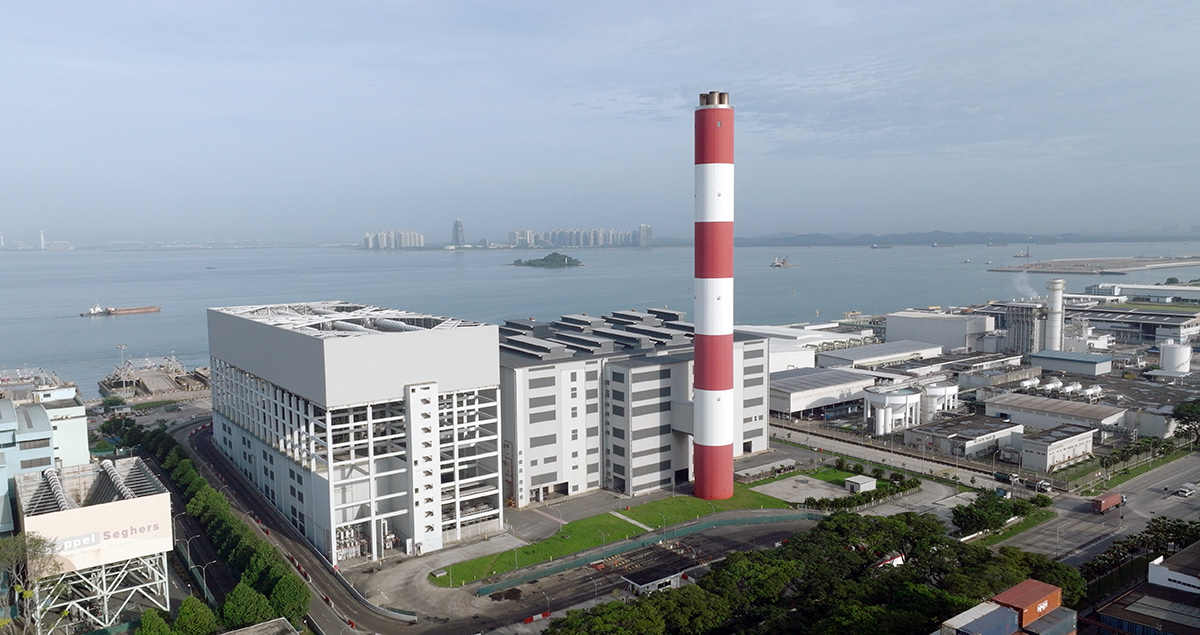
We have a strong track record in the stable operation of Waste-to-Energy Plants, as well as the ability to build with state-of-the-art technology and the world's largest WTE plants successfully operating under PPP (Public-Private Partnership) schemes. This has enabled us not only to be one of the leading companies of waste-to-energy plants in Japan but also to succeed abroad. Since delivering the Tuas Incineration Plant in Singapore, our first overseas project, in 1986, we have delivered a total of four plants in Singapore, culminating in the latest TuasOne Waste-to-Energy plant, which began operation in 2021. As a result, our market share based on incineration capacity of plants, currently in operation, and owned or contracted by the Government in the country, has reached approximately 90%.
Overall, we have delivered more than 30 waste treatment plants worldwide, most of them across Southeast Asia. With the US and European markets dominated by entrenched local suppliers, our target markets are in East Asia: Taiwan, South Korea and China (where we operate through licensees). While Japanese market growth is mostly based on replacement demand, we see the global waste-to-energy market growing at a very healthy 6% a year until at least 2034.
Smarter, cleaner, greener
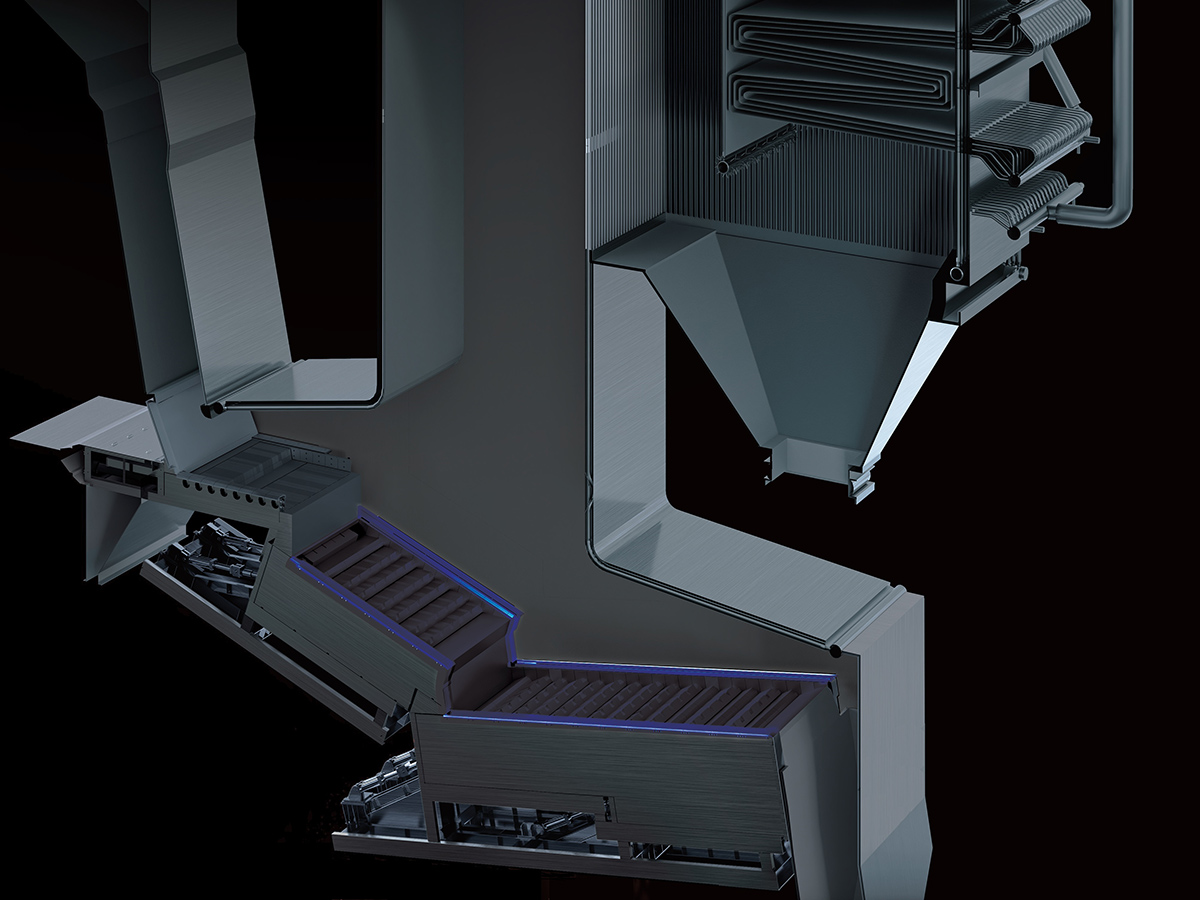
I believe MHIEC is well placed to benefit from this underlying growth, and even to take market share, based on our experience, the benefit of being part of a larger group and, above all else, our proprietary technology. The stoker furnace is the heart of the incinerator and we have recently launched a patented V-type stoker that produces a more stable flame, allowing it to burn more of the waste more effectively. This makes it especially suitable for lower-calorific waste.
We are also fortunate that we can partner with other MHI Group companies to respond to customer needs. Currently, we are testing a CO₂ capture system, developed by MHI colleagues, for a waste-to-energy plant in Yokohama. Separately, the Tokyo Metropolitan Government has ordered a sewage sludge incineration plant from us that incorporates a high-efficiency Organic Rankine Cycle power generation system from Turboden, MHI’s Italian subsidiary.
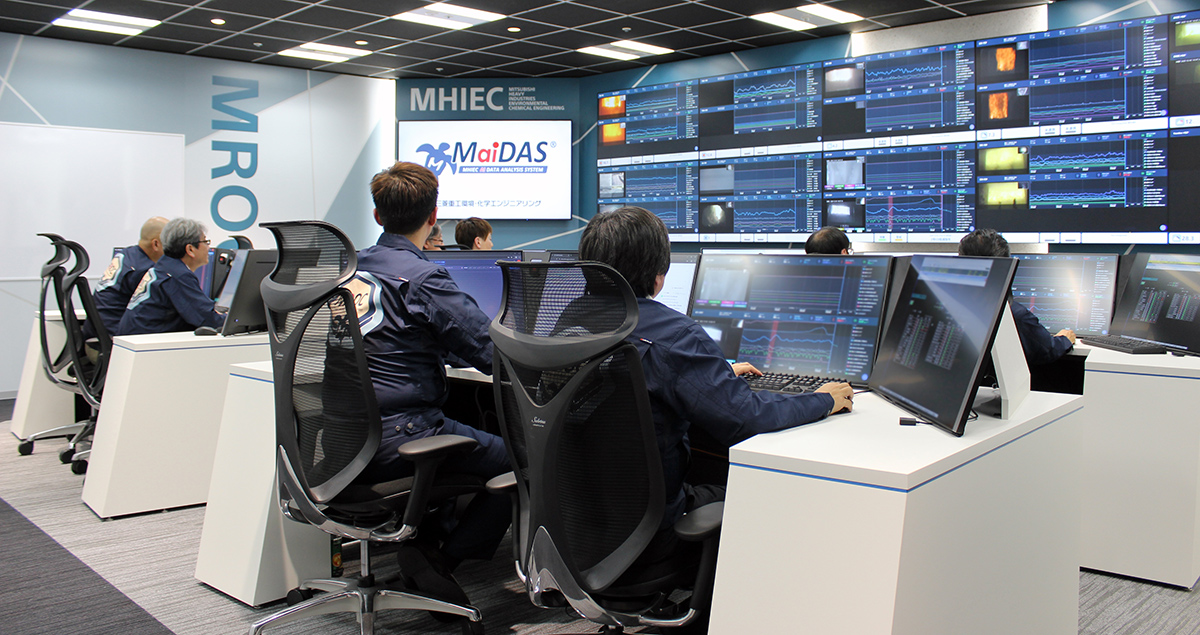
Simultaneously, we are working to increase our own use of technology and artificial intelligence to improve efficiency and anticipate future labor shortages. Our MaiDAS® AI-based remote monitoring and operation support system, installed at approximately 20 plants in Japan as well as in Singapore, potentially allows a reduction in operating personnel .
Meanwhile, the Remote Operations Center we launched at our headquarters in Yokohama just last December, allows us to keep a constant eye on operations at customer sites and provide real-time support.
I am also excited about research we are conducting jointly with MHI’s Shared Technology Center into how to improve – and potentially automate – solid waste collection. Simply picking up and delivering trash accounts for almost 30% of the overall cost of municipal waste management.
If we can reduce this meaningfully, it could break open the market in our favor and sales in Japan could increase significantly. It would also support overseas growth, which is already set to benefit as more countries reach a level of prosperity where they can afford the shift from landfill to incineration. Together, these developments give me confidence that MHIEC will continue to prosper as the world tackles its waste.

Read more about Mitsubishi Heavy Industries Environmental & Chemical Engineering
Related tags
SHARE


Yoshihiro Noguchi
Yoshihiro Noguchi is President & CEO of Mitsubishi Heavy Industries Environmental & Chemical Engineering, a division of MHI Group
MHI endeavors to ensure all content published on Spectra is accurate and current at the time of publication; however, data and links are subject to change, and MHI accepts no responsibility for information that has since been updated or amended. For more information please refer to our Terms of use.