


This is how AI helps capture ‘silent’ engineering expertise

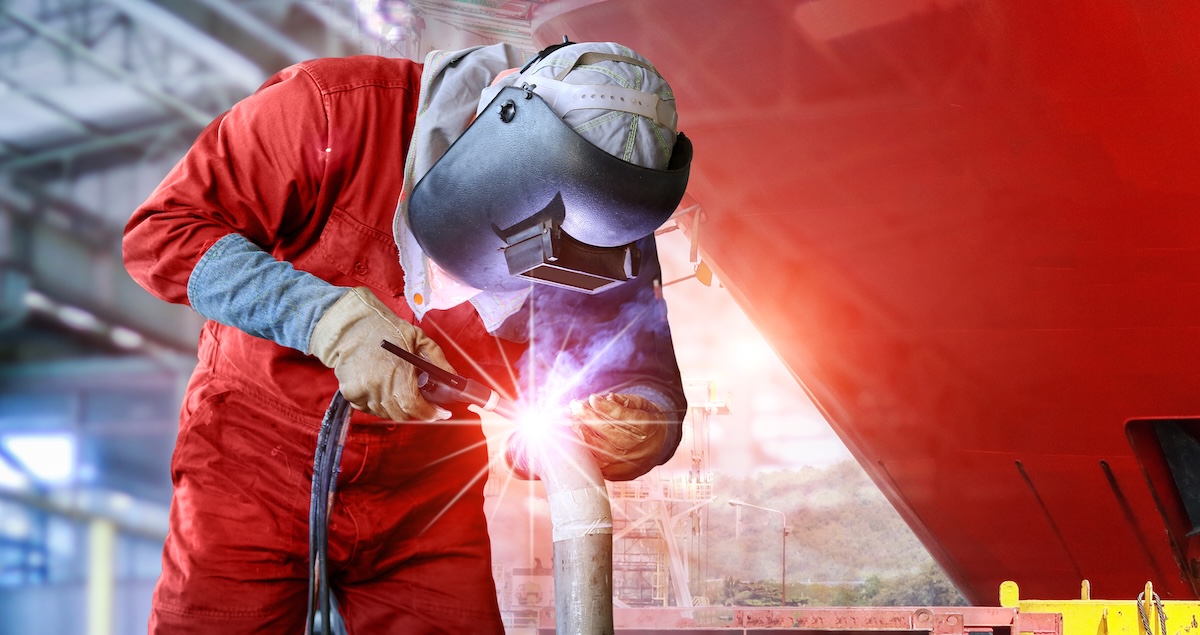
From power grids and data centers to transport networks, automated factories and low-carbon energy, welders are in greater demand than ever. Yet, employers are struggling to find them. With a large cohort of experienced workers retiring over the next five years, the challenge is not only replacing them but also transferring their knowledge and skills to junior welders.
An award-winning video analysis solution from Mitsubishi Heavy Industries (MHI) and Algomatic Dynamics has put artificial intelligence (AI) on the case, aiming to improve knowledge and skills transfer to upskill young welders more quickly and raise productivity.
The challenge of passing on tacit knowledge
“In engineering and manufacturing, many of the skills that experienced workers have acquired over time are tacit knowledge,” explained Kazuya Tsutsumi, Senior Manager, Research & Innovation Center, and others at MHI. “Not enough of this knowledge is being extracted and set down in writing or another shareable format."
“The welders themselves often struggle to fully articulate the expertise embodied in the processes they have honed over time and now use intuitively. We had to find a way to visualize and formalize these seemingly invisible skills.”
Working with AI experts Algomatic, MHI looked to AI to help make processes that are hard to pin down transferable to younger workers.
Deploying AI to decode silent skills
The partners identified TIG (tungsten inert gas) welding — a method which underpins everything from energy plants to rockets — as one of the areas where a more effective knowledge transfer between the generations was needed.
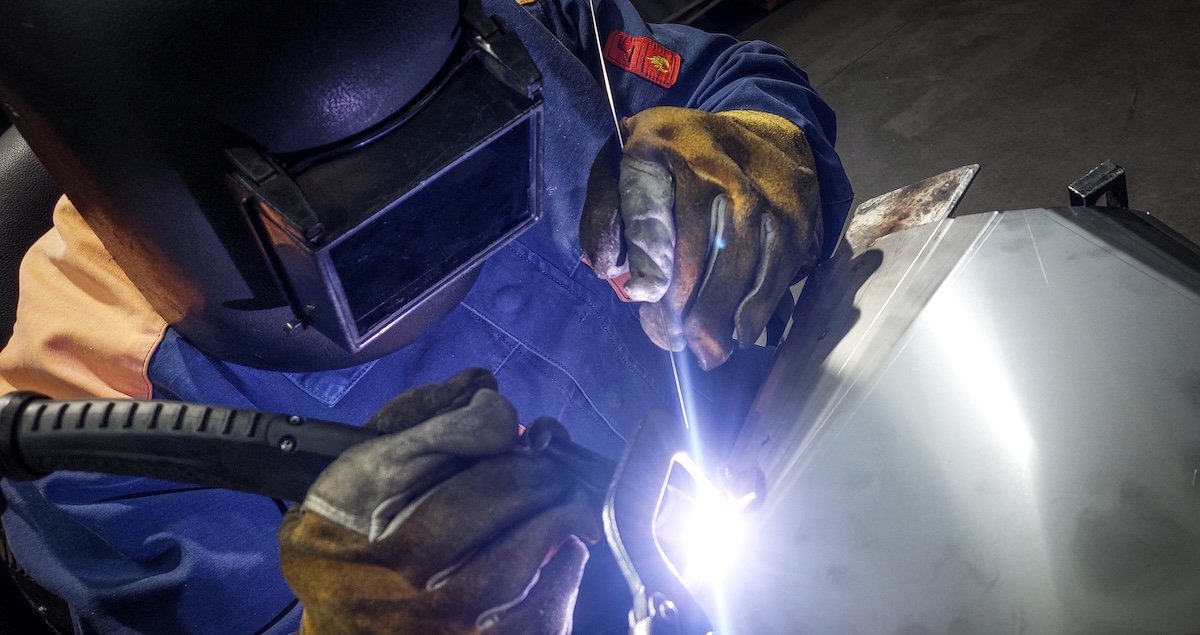
“TIG welding is a high-quality method supporting many MHI products. It requires skillful handling of the torch and rod, with operators monitoring the condition of the molten metal while performing different tasks with each hand. Differences in skill affect both quality and work time. It involves a great deal of embodied knowledge and skills that we had previously struggled to capture, making it an ideal subject for our project,” highlighted Tsutsumi and others.
The underlying idea was simple: record videos of TIG welding performed by senior technicians and less skilled workers , and use AI to analyze the differences between them.
Making invisible expertise visible
Once skilled and less skilled workers' videos are uploaded, the AI agent developed by MHI and Algomatic extracts key points for evaluation. Based on these, specialized analysis modules then pinpoint the differences between skilled and less skilled practitioners, representing these both visually and verbally.
“The differences in skill often relate to factors such as retention of the torch tip, at which position and for how long, the trajectory of the torch tip, and the brightness distribution — how intense the light gets when using arc welding or lasers. In other words, TIG welding embodies a wealth of ‘embodied knowledge,’ making it an ideal subject for extracting tacit knowledge,” explained Tsutsumi.
When a new video of a trainee of acquiring skills is uploaded, the AI agent also assesses a technician’s skill level from the video and provides targeted upskilling recommendations. It helps trainees clearly and quantitatively understand where their skills could be improved, and also helps trainers better understand the gaps in workers’ skill sets, enabling more targeted upskilling.
Bridging the engineering skills gap
“Our project succeeded in identifying and formalizing the tacit knowledge senior technicians have and find hard to pass on effectively. By simply comparing videos, it became possible to capture skills and processes that are difficult to verbalize, making them transferable,” argued Tsutsumi.
MHI expects its AI system to eventually shorten TIG welding training, enabling welders to upskill quickly and boosting productivity. It is also considering adapting its AI video analysis technology for other tasks that require significant embodied knowledge.
However, Tsutsumi and others stressed the importance of setting realistic expectations: “Videos alone don’t capture all the information, and AI cannot provide all the answers. Gaining meaningful insights, however, is a very valuable outcome in its own right, helping us bring along a much-needed new generation of workers.”
Discover more about how MHI is expanding and developing human capital
Related tags
SHARE


Andrea Willige
Andrea Willige has spent many years creating content for the international business and technology press, working on behalf of some of the world’s largest technology companies.

MHI endeavors to ensure all content published on Spectra is accurate and current at the time of publication; however, data and links are subject to change, and MHI accepts no responsibility for information that has since been updated or amended. For more information please refer to our Terms of use.