


Inside the Cambridge lab propelling turbomachinery into the future

Jet engines operate at temperatures that would usually melt the materials they are made of. Given such pressures, it’s not hard to understand why, traditionally, it has taken years to develop new aerospace and energy technology to a point where it can be commercially released.
Yet today, amid growth, competitiveness and climate challenges, there is a pressing need to bring more powerful and more efficient turbomachinery technologies — including jet engines and gas turbines — to the market faster.
That’s exactly the mission of a new facility at a UK research lab, which is applying a Formula 1-style philosophy of continuous improvement, rapid iteration and testing to propulsion and power.
A brief history of the Cambridge Whittle Laboratory
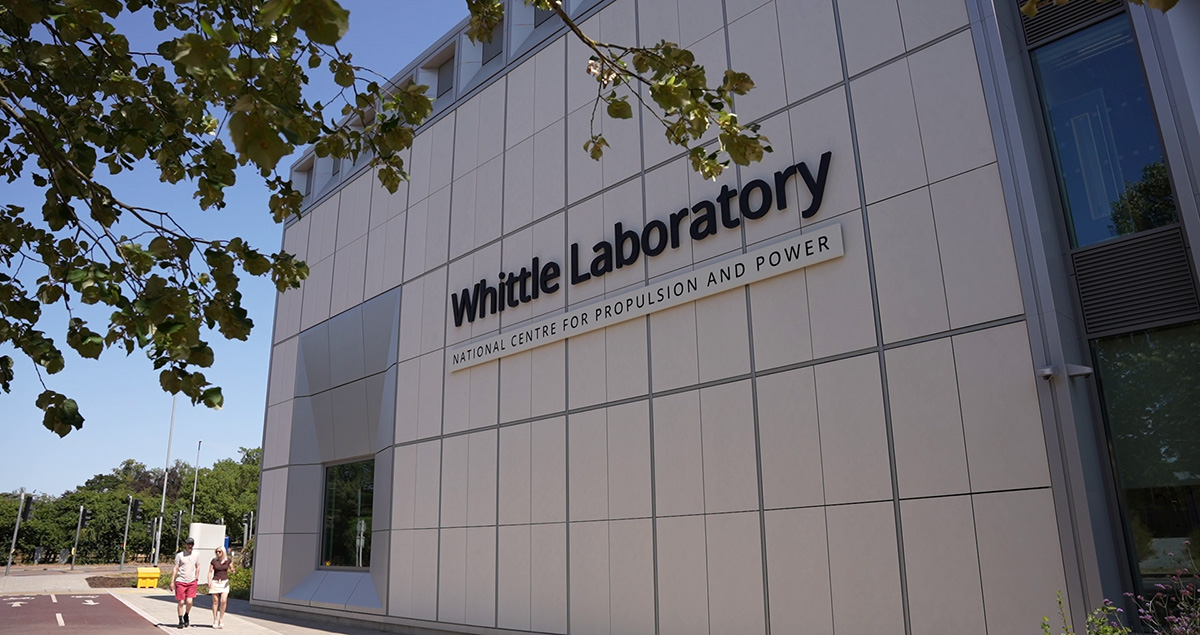
That lab is the Whittle Laboratory, a part of the Department of Engineering at the prestigious University of Cambridge. For decades, it has been working to advance turbomachinery — defined as machines that perform a continuous energy conversion between fluid energy and mechanical energy using a rotating impeller.
Opened in 1973 by Sir Frank Whittle —a British Royal Air Force pilot and aviation engineer credited with inventing the jet engine — the facility is one of the world’s leading jet engine and power generation research laboratories.
Home to elite teams of engineers and scientists, as well as significant manufacturing facilities to support its research work, the laboratory combines experimental and computational methods to determine the underlying physical mechanisms that affect turbomachinery performance — in everything from the aerodynamics of a single blade to complex power systems.
Over the years, this set-up has successfully translated many research ideas into industrial products, including designs to make airplane engines more efficient and less impactful on the planet. For example, it contributed to a switch from 2D to 3D compressor blades in Rolls-Royce engines, a design that reduced fuel consumption and has become the industry standard.
Rapid advancement of propulsion and power technologies
Despite its successes, Whittle is not standing still. Recently opened by King Charles III, its new $77 million facility aims to dramatically reduce the time it takes to develop key aerospace and energy technologies that will help realize carbon neutrality.
The New Whittle Laboratory comprises two elements. The first is an innovation lab designed to launch 20-30 missions over a decade that will build new industries in the UK. The second is the National Centre for Propulsion and Power (NCPP): a test facility that will work to cut the time between ideas and testing from years to weeks.
At the heart of the NCPP’s effort is a culture that the University of Cambridge says will promote risk and provide access to “Formula 1-style rapid fabrication and testing”. This will involve fast testing, feedback and manufacturing.
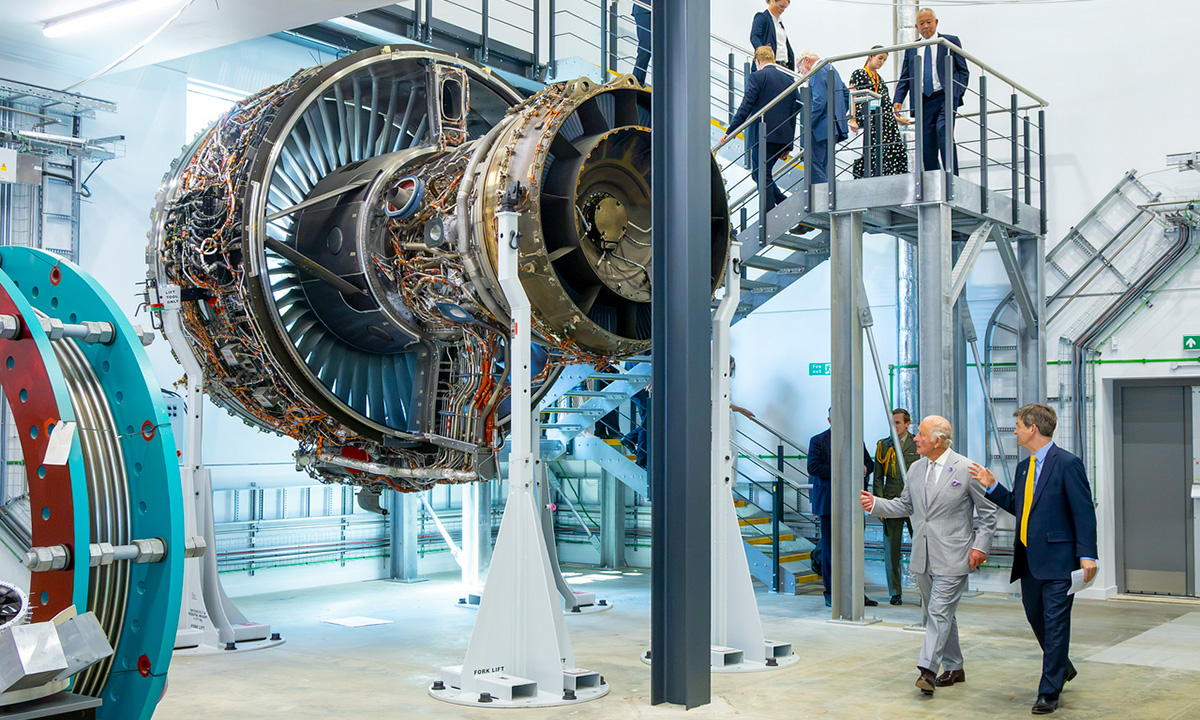
It also houses some impressive kit, including a large-scale 4-megawatt (MW) wind tunnel to help test fluid and thermodynamics, a flexible 1.2MW rotating rig facility to test components under realistic high-power conditions and a 60-tonne pressure vessel that, the lab says, enables entirely new testing capability in the UK.
A longstanding collaboration with MHI
The Whittle Laboratory’s researchers and engineers also collaborate with industry leaders, including the aforementioned Rolls-Royce, technology firm Dyson and Mitsubishi Heavy Industries, Ltd. (MHI)
MHI’s relationship with the lab stretches back to the early days, when in 1977, the then Executive Vice President of the company visited the lab. Collaborative research between the organizations has since been conducted in fields including steel metallurgy, internal combustion engines and vibration engineering.
MHI also has long-term relationships with Whittle Laboratory lecturers and fellows, and these partnerships promote open innovation in the fields of turbomachinery aerodynamics, heat transfer and experimental measurement technologies.
Recently, artificial intelligence (AI) has been employed in projects including advanced thermo-fluid measurement. The companies will continue to explore AI-enabled data utilization and analytics in the New Whittle Laboratory.
A ‘new era of turbomachinery development’
MHI hopes to use the advanced facilities in the new lab to accelerate research and development of carbon-neutral rotating machinery, which will be vital to help meet global climate targets, shift to alternative fuels and ensure reliable power.
MHI President and CEO Eisaku Ito said on the opening of the NCPP: “I hope the new Whittle laboratory can open the new era of turbomachinery technology development.”
With world-leading research teams, cutting-edge facilities and the expertise of industry partners, the facility is primed to do just that.

Read more about MHI’s turbomachinery innovations
Related tags
SHARE


David Elliott
David Elliott has two decades’ experience working as a journalist, communications professional and content creator, including for some of the world’s biggest technology brands.
MHI endeavors to ensure all content published on Spectra is accurate and current at the time of publication; however, data and links are subject to change, and MHI accepts no responsibility for information that has since been updated or amended. For more information please refer to our Terms of use.