


How algorithmic design is changing industrial engineering

How can a business with deep expertise across multiple domains unify product development without losing engineering precision? One answer is through algorithmic design.
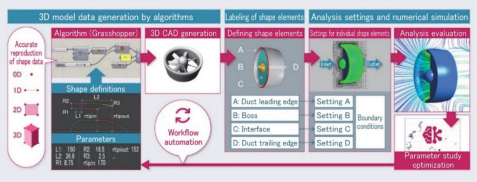
Originally developed for the architectural field, algorithmic design employs user-defined rules to recreate shapes from point data to 3D volumes, and it can turn 3D models directly into inputs for analysis tools through labeling.
Mitsubishi Heavy Industries (MHI) Group has now developed an algorithmic design platform for industrial products to help improve performance, reliability and development speed for everything from turbomachinery and ships to drones. It creates a crucial advantage, enabling faster responses to customer needs and technological shifts, while lowering costs and providing high-performing, reliable and efficient products.

What problem does the platform solve?
About 80% of lifecycle costs are determined in early design, and design changes become much harder in later phases of development. This can affect both cost and quality.
The algorithmic design platform will help teams across MHI’s 30 business domains test more ideas faster and optimize multiple metrics at once — from lower leakage and higher efficiency to stronger vibration resistance and faster concept validation.
Because product shapes, modeling methods and development workflows can vary across those business domains, off-the-shelf platforms — which could not easily handle product geometries and engineering requirements — were not enough to cover the full portfolio.
To address this, MHI set out to create a shared design approach that still respected the complexity of each business and product type.
What algorithmic design changes
Instead of using time-consuming manual modeling, the platform allows MHI to define shapes using rules and parameters.
It can generate 3D shapes and feed them directly into analysis tools, helping to reduce friction between design and simulation.
Supporting multiple physics models — including fluid dynamics, thermodynamics, structural mechanics and vibration analysis — it can handle a wide range of components across multiple technical fields.
For example, in the marine turbocharger industry, performance competition has intensified against the backdrop of heightened economic expectations for the adoption of new fuels, and rapid innovation is vital. Algorithmic design allows the simultaneous evaluation of aerodynamic performance and vibration strength for a vast number of shapes, enabling products that achieve both high efficiency and high reliability to be rapidly designed.
This holistic view of a product across multiple metrics or disciplines — rather than working at the level of individual components — is a key benefit of the approach.
Where the technology can deliver value
The platform is already demonstrating how it can both boost manufacturing efficiency and improve products across sectors, with research from MHI showing improvements in areas including:
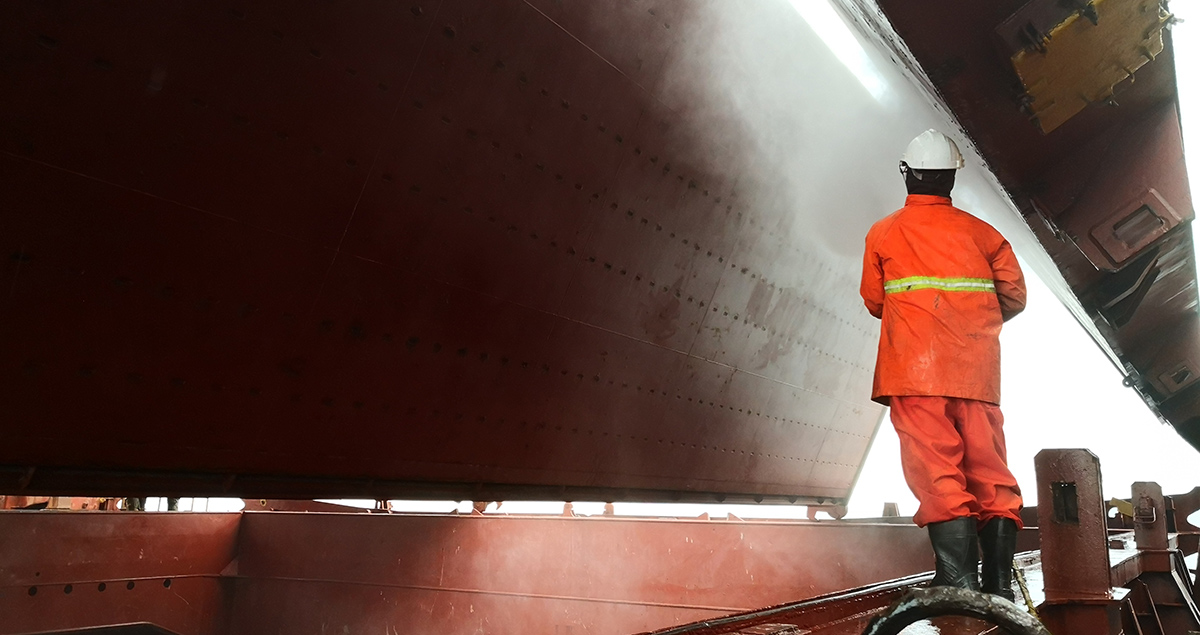
- Ship hull design: algorithmic design cut the time needed to create a hull shape by about 80%, while keeping the design performance strong.
- Seals in turbomachinery: by optimizing two sealing parts together, the platform helped reduce leakage by 21.7% compared with the original design.
- Axial turbine of marine turbochargers: improved efficiency at low load by 0.49% and reduced vibration stress by up to 78% in the most affected areas.
- Industrial drones: MHI developed a ducted-fan drone shape that was more stable, produced 13% less sideways force under crosswind conditions, and increased thrust slightly in calm conditions.
A strategically important approach
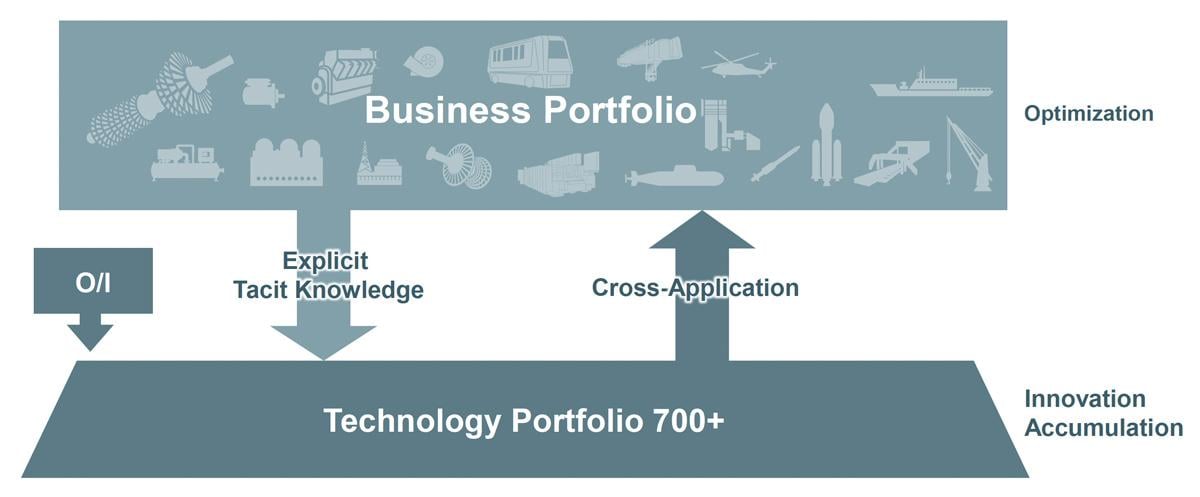
This platform is important for MHI as it leverages the expertise across its more than 700 technologies to create sustained and sustainable growth.
Moving from isolated product improvement to cross-domain learning and reusable engineering intelligence is a core part of MHI’s approach to innovation. The company’s Shared Technology Framework ensures that where products share common characteristics — for example, the need to operate in extreme temperatures or pressures — they can be designed and manufactured by applying the same core technologies.
Allowing for simultaneous optimization of multiple metrics, the faster hypothesis testing algorithmic design supports is especially valuable for new product development in such fast-changing markets.
MHI’s algorithmic design approach is more than a software upgrade — it is a pathway to scaling engineering expertise across businesses, shortening development cycles and improving product value at the same time.
As the technology expands to more applications, it is set to become a core enabler of the next generation of high-performance industrial products.

Discover more about how MHI is reimagining R&D
Related tags
SHARE


David Elliott
David Elliott has two decades’ experience working as a journalist, communications professional and content creator, including for some of the world’s biggest technology brands.
MHI endeavors to ensure all content published on Spectra is accurate and current at the time of publication; however, data and links are subject to change, and MHI accepts no responsibility for information that has since been updated or amended. For more information please refer to our Terms of use.