


Smarter skies: how AI can help aircraft avoid lightning

One of the lesser-known side effects of climate change is that lightning frequency has increased due to warmer, wetter weather. For airlines, this means aircraft could be at greater risk of lightning damage.
A new AI-based system from Mitsubishi Heavy Industries (MHI) Group can now predict where lightning is likely to occur, so flight paths can be adapted to protect aircraft from strikes.
Why do we experience more lightning?
Rising storm activity accompanied by lightning is particularly evident in areas such as tropical Africa, parts of Southeast Asia and North America. In the first two decades of the century, lightning rates rose by around 10%.
Scientists have attributed this to rising surface temperatures and air holding more moisture. Extreme weather events such as Australia’s wildfires have been shown to increase the occurrence of lightning significantly.
The impact of climate change raises the probability of encountering lightning, adding to phenomena such as induced lightning, which occurs when an aircraft flies through an electrically charged cloud and triggers a strike, and severe “winter lightning”, which is prevalent in areas such as coastal Japan.
As the number of lightning strikes rises, so does concern over potential economic losses for airlines.
Commercial passenger planes, for example, are already hit by lightning one or twice a year on average. In Japan, several hundred aircraft lightning strike incidents occur each year, and the resulting inspections and repairs can lead to operational disruptions and increased costs.

What are the risks to aviation?
While the metal structure of the plane – like a car – protects those on board when lightning strikes, there is risk to aluminum airframes and the composite materials used in the hull and wings. Generating temperatures exceeding 30,000℃, lightning can cause these composites to delaminate.
In addition, electronic systems, compasses and radio and navigation equipment may get damaged or fail due to the high electric discharge.
This is why, after a lightning strike, the aircraft concerned must undergo a thorough inspection to ensure its continued airworthiness. Until all checks and necessary repairs are completed, the aircraft remains grounded. Such outages can cost airlines more than $2 billion per year in flight delays or cancellations.
How can AI help aviation mitigate lightning losses?
To mitigate the economic impact of lightning strikes on airlines, Japan Airlines (JAL) and MHI have developed a new digital system aimed at a single goal: keeping aircraft operating safely and efficiently by avoiding thunderstorms.
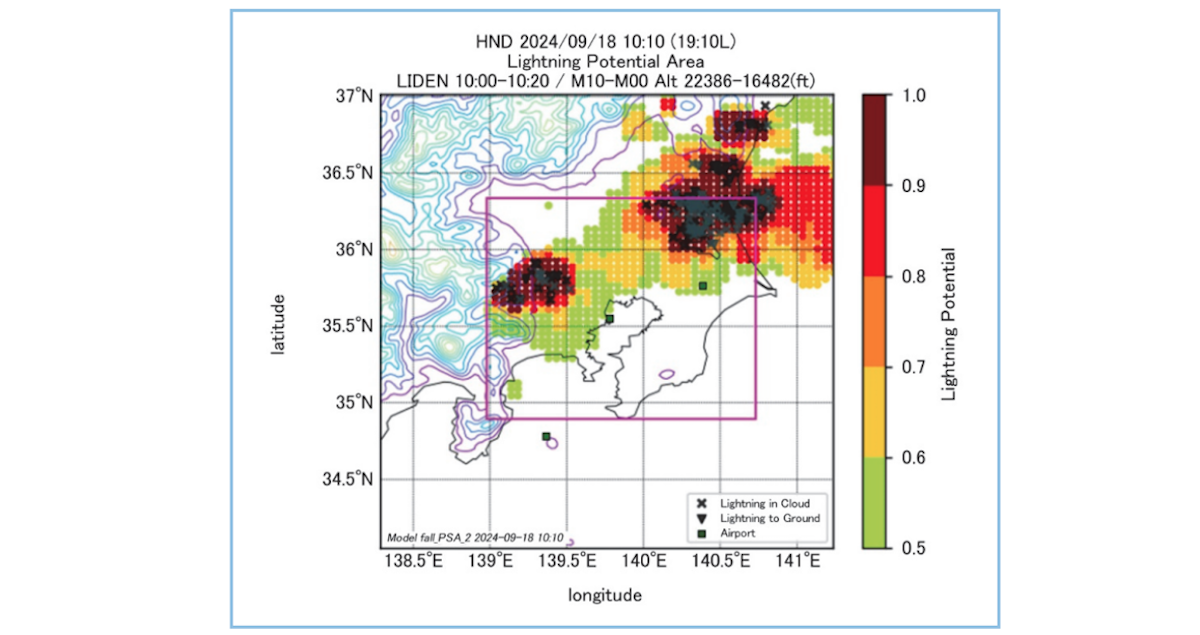
The new system, called Lilac, can predict where lightning will occur with a high level of accuracy. It combines an AI-based prediction model developed by MHI and the Japanese space agency, with real-time data from the Japanese Meteorological Agency.
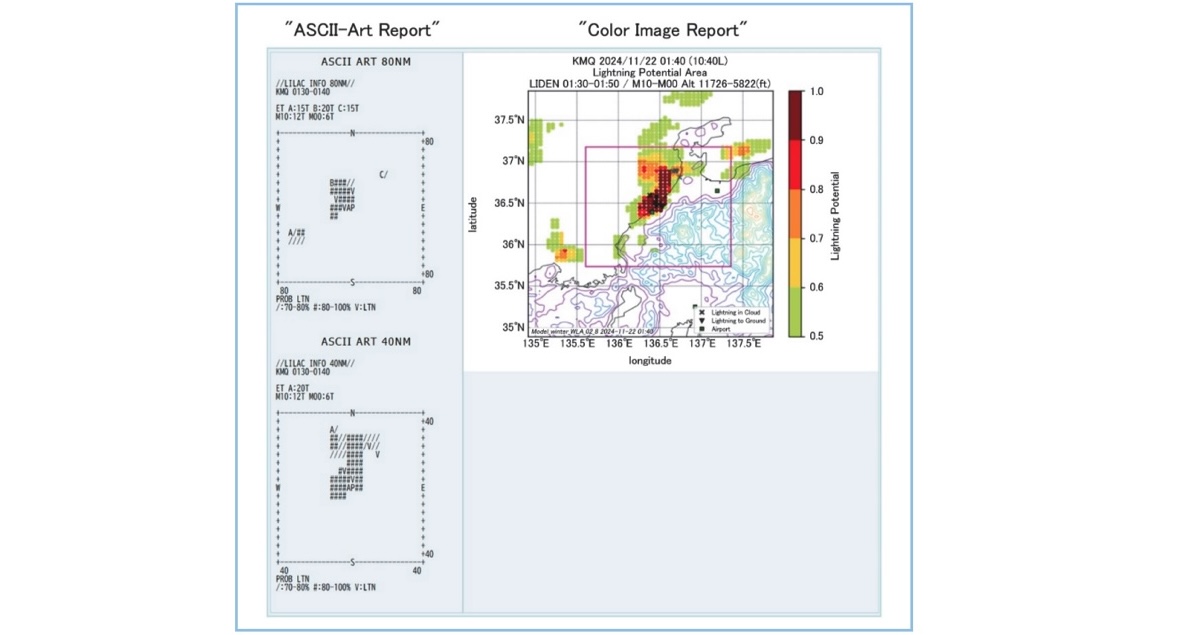
Airline ground operators preparing the flight for departure can check for high-risk lightning zones in real time using a web browser. Pilots can access the system either via cockpit WiFi, where available, or through the Aircraft Communications Addressing and Reporting Systems (ACARS), which ground operators use to share information with pilots.
While the web browser access provides color image reports to ground operators, MHI has created simpler line graphics for pilots using the ACARS system in the cockpit. Aircraft are particularly prone to being struck during take-off and landing. As pilots must make a plethora of decisions during these flight phases, line graphics help them easily grasp the risk of lightning.
What changes has AI been able to effect?
The Lilac lightning prediction system has been in use by multiple airlines in Japan since April 2024, helping them adapt take-off and landing paths to avoid zones where lightning is likely to strike.
In 2024, lightning activity around major Japanese airports increased by a factor of 1.4 compared to the previous year, yet the number of aircraft struck by lightning decreased. At the same time, maintenance and repair costs, as well as losses from flight delays, cancellations and aircraft change handling, have reduced markedly. This has also contributed to passengers’ sense of security and perceptions of the airline’s reliability.
While the system has been piloted in Japan, it can be rolled out anywhere in the world where airports face frequent lightning incidents. MHI is planning to expand its functionality to forecasting the likelihood of strikes days or even weeks into the future to further improve the safety of air travel. In addition to airlines and airports outside of Japan, the system could also have uses beyond aviation.

Discover more about MHI’s work in aviation
Related tags
SHARE


Andrea Willige
Andrea Willige has spent many years creating content for the international business and technology press, working on behalf of some of the world’s largest technology companies.
MHI endeavors to ensure all content published on Spectra is accurate and current at the time of publication; however, data and links are subject to change, and MHI accepts no responsibility for information that has since been updated or amended. For more information please refer to our Terms of use.