


Why co-electrolysis could transform the fortunes of SAF

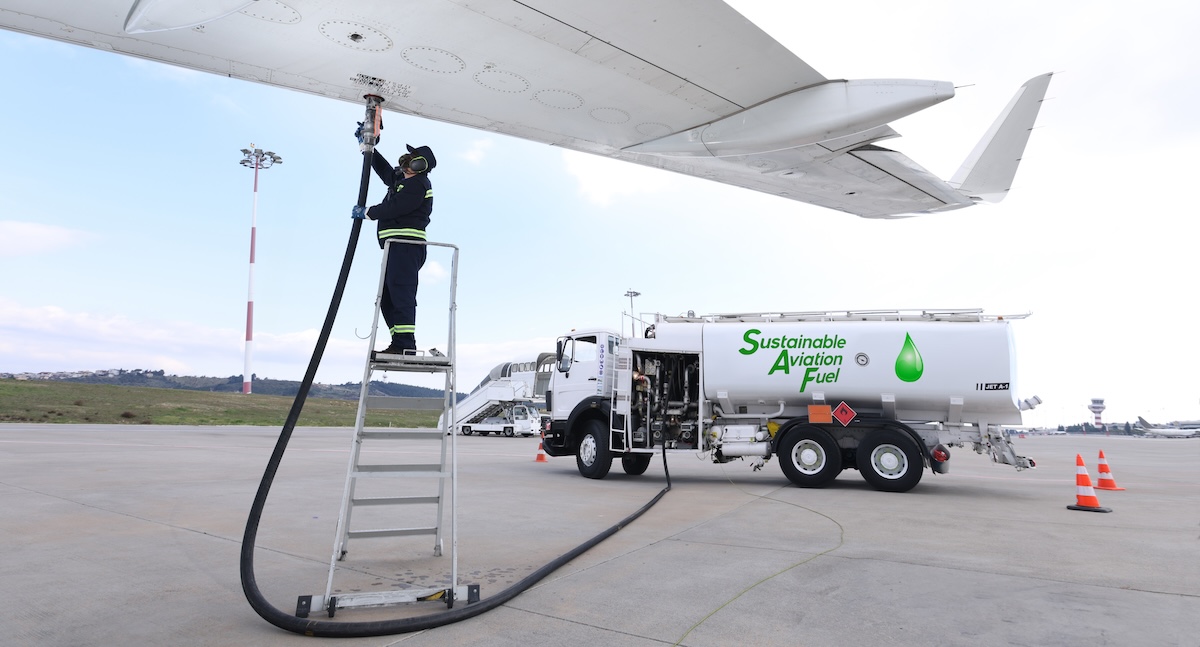
Sustainable aviation fuel (SAF) represents a substantial opportunity for decarbonizing aviation. Driven by regulation, production volumes have been growing, but progress remains slow. A new technology from Mitsubishi Heavy Industries (MHI) Group could now make SAF more accessible to an industry under pressure to decarbonize while meeting an expected doubling in air travel demand by 2050. The technology can also produce other biofuels more efficiently, supporting the wider decarbonization of shipping and road transport.

What is driving the need for SAF and other biofuels?
Commercial aviation is one of the ‘hard-to-abate’ industries that heavily depends on fossil fuels and cannot easily be decarbonized through electrification.
Sustainable aviation fuel is a biofuel alternative to traditional fossil-derived jet fuel that can reduce aviation CO2 emissions by up to 80% without requiring aircraft engines to be adapted .
By far the biggest driver for the growing interest in SAF and other biofuels (or e-fuels) for use in transport is regulation. This includes the EU’s RefuelEU legislation for aviation, the RED II/III Directives’ targets for e-fuels and the Clean Fuel Production Credit (45Z) in the US. In parallel, industry groups, such as the International Air Transport Association (IATA), have also laid out their SAF commitments, as have airlines.
Despite this growing momentum, access to sustainable feedstocks is limited, and aviation must compete with other sectors for them. Production costs for SAF are high compared to jet fuel, making the development of innovative technology essential.
How a new production method could accelerate market growth
In a bid to make SAF production more cost-competitive and speed market growth, MHI has recently demonstrated an integrated process for producing synthetic fuels with a co-electrolysis system based on a Solid Oxide Electrolysis Cell (SOEC).
MHI’s co-electrolysis technology uses solid oxides as electrolytes to split carbon dioxide and water vapor at very high temperatures to simultaneously produce hydrogen and carbon monoxide. These are then converted into e-fuels like SAF using the traditional Fischer-Tropsch (FT) process (see schematic, below).

Not only does co-electrolysis provide a potential use for CO2 captured from biomass fuel, it is also highly efficient. An SOEC can theoretically produce more hydrogen per kilowatt of energy than any other type of electrolyzer currently available. This could help scale up production and reduce costs, both factors holding SAF back at present.
What is more, co-electrolysis also has significant potential for producing other synthetic biofuels such as e-methanol, e-methane and e-diesel, which are key candidates for decarbonizing shipping and road transport.
These e-fuels are all synthesized in similar ways to SAF. The e-fuel market overall is expected to grow from $18 billion in 2025 to $128 billion by 2033, equivalent to a CAGR of 28%. Co-electrolysis is one of the technologies that holds great potential to meet these targets.

A step change for e-fuels
Alongside co-electrolysis, there are several other technologies ready to step up, including those developed by three companies MHI has invested in.
Infinium is set to ship SAF from its Texas, US, plant to IAG to meet tight EU and UK government targets. Cemvita — also based in Texas — recently announced an offtake agreement with United Airlines to supply up to 1 billion gallons of SAF from regenerated carbon waste over 20 years. Meanwhile, Syzygy Plasmonics has signed an offtake agreement with global commodities company Trafigura covering the entire production volume of a new biogas-to-SAF facility in Uruguay.
Together with co-electrolysis, these technologies are expected to contribute not only to the SAF supply chain but also to the growth of other synthetic biofuels such as e-methanol, e-methane and e-diesel for decarbonizing shipping and road transport.

Discover more about MHI’s work in decarbonizing hard-to-abate sectors
Related tags
SHARE


Andrea Willige
Andrea Willige has spent many years creating content for the international business and technology press, working on behalf of some of the world’s largest technology companies.
MHI endeavors to ensure all content published on Spectra is accurate and current at the time of publication; however, data and links are subject to change, and MHI accepts no responsibility for information that has since been updated or amended. For more information please refer to our Terms of use.