


Turning gravel and groundwater into a battery

Countries around the world are grappling with the question of how to effectively use the excess electricity generated by sources like wind and solar when production exceeds immediate demand.
In some regions, part of the answer might lie beneath citizens’ feet — in the form of aquifer thermal energy storage (ATES) systems.
Not only can these underground systems store excess heat from summer cooling and excess cold from winter heating, but researchers are now exploring how they can be used to absorb surplus renewable energy too. This could present a promising solution to renewables’ intermittency problem.
Here’s a look at why ATES systems are important, where they are currently being used and how they might be deployed in the future.
What are aquifer thermal energy storage systems?
Heating, cooling and powering buildings uses vast amounts of energy — often from burning fossil fuels — and creates almost a third of the world’s energy-related CO2 emissions.
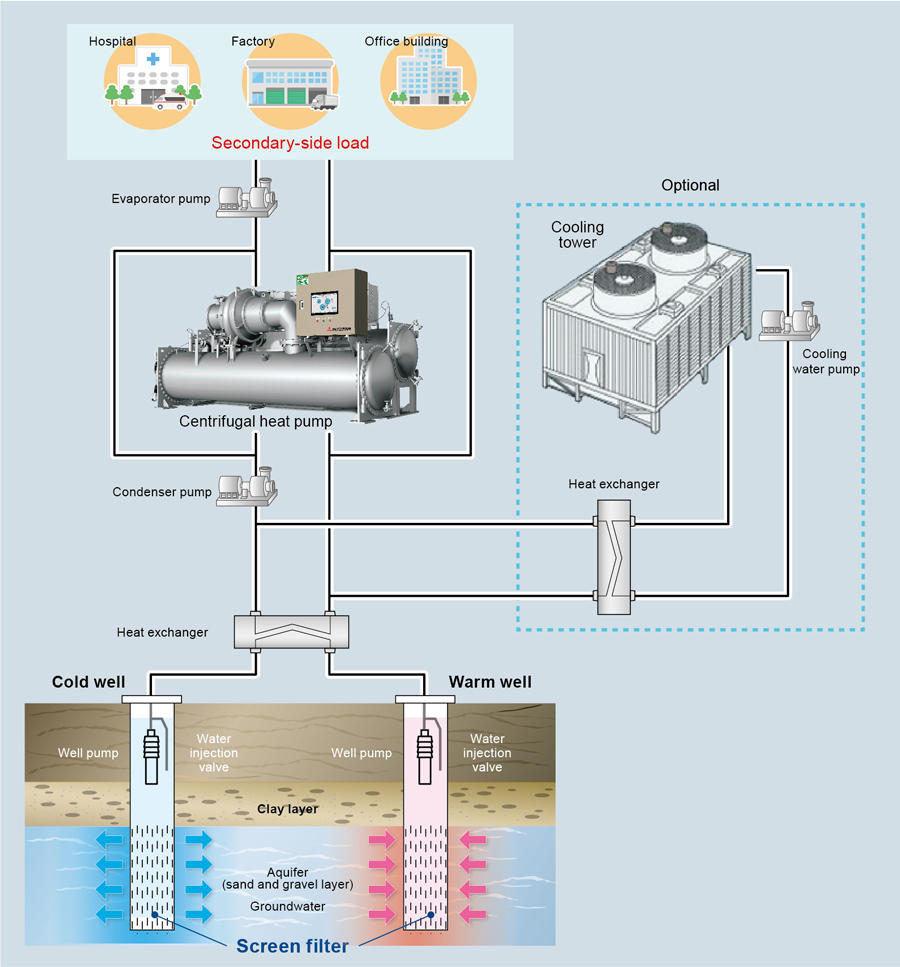
ATES systems reduce the reliance on fossil fuels for heating and cooling by storing excess heat and cold from buildings in underground water-bearing layers called aquifers, which are made of materials such as sand and gravel. Depending on the season, this thermal energy is then pumped back out to help heat or cool buildings.
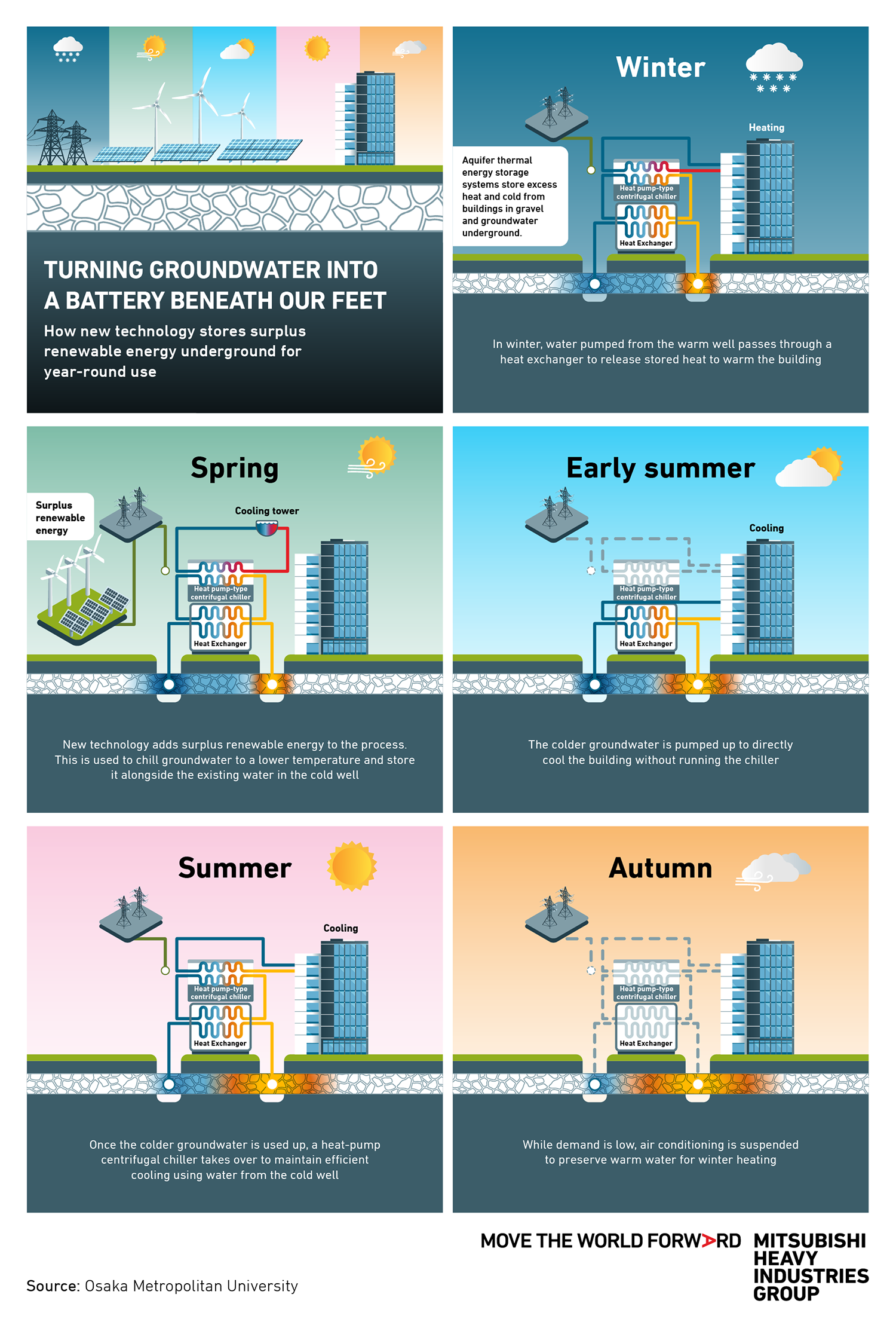
At the heart of the system are two thermal wells, one for cold storage and one for hot storage. Chilled groundwater is pumped from the cold well and used for building cooling. As it absorbs heat, it is pumped back into the warm well. This heat can be stored until winter, when the process is reversed: warm groundwater is pumped out for heating, and the cooled water returns to the cold well.
This cycle allows a better use of thermal energy across the year by enabling the circulation of heat across seasons.
In Japan’s warm climate, for example, ATES can reduce greenhouse gas emissions by almost 75% compared to conventional heating and cooling technologies. There is also an impact on annual operating costs: compared with a conventional air conditioning system using an air source heat pump, an ATES system can reduce power consumption by nearly 40%.

Where are ATES systems being used?
ATES systems are particularly suited to providing heating and cooling for large-scale applications such as public and commercial buildings, including airports, universities and hospitals, district heating or industrial use.
About 85% of the world’s operational ATES systems can be found in the Netherlands, which has an abundance of aquifers and has benefited from government support for the technology. The country has about 3,000 systems, including the world’s largest at the University of Technology in Eindhoven, where 36 wells deliver heat and cold to 19 of the institution’s buildings.
ATES is also being used to cool data centers, including at a facility in Amsterdam, where cold groundwater cools equipment and excess heat is used to warm nearby buildings.
A further 10% of current systems are in Sweden, Belgium and Denmark.
In other regions, the technology is still at the early innovation stages or not used at all, even in areas with suitable aquifers. There are a variety of reasons for this in places like Japan, including restrictions on groundwater pumping due to risks of subsidence. ATES systems, however, mitigate this risk by returning extracted groundwater immediately after it is used as a heat/cold source.
More regions are beginning to investigate the decarbonization potential of the technology. Interest is growing in the UK, for example, where it is considered to have “high potential”. In Japan — another place where many urban areas sit above suitable aquifers — the technology is expected to become more widely adopted, driven by government-backed programs and research.
What are some of the latest developments in ATES systems?
One new project in Japan is, for the first time, testing how ATES systems could be used like a battery in April and May to store surplus renewable energy generated by sources such as solar and wind in those months.
This project is being implemented by a consortium of industry and academic partners as part of a technology development and demonstration project from the Ministry of the Environment, Japan.
Building on the large-scale aquifer thermal energy storage systems previously commercialized through government-supported initiatives, this project aims to enhance the value and broaden the adoption of ATES technology.
The Surplus Renewable Energy Absorption and Release System — developed by Mitsubishi Heavy Industries Thermal Systems, a part of Mitsubishi Heavy Industries (MHI) Group, and partners including Osaka Metropolitan University — uses excess electricity to run a heat pump-type centrifugal chiller that generates chilled water, which is then injected into the aquifer via the ATES wells.
The system can flexibly switch between cold and heat storage based on demand and energy availability.
The future of energy storage
As the world generates increasing amounts of renewable power on the road to net zero, ensuring grids are balanced and surplus energy is used effectively is a rapidly growing priority.
This will involve modernization and expansion of grids and a significant increase in energy storage capacity, which can require extensive land use and significant additional costs.
In areas with suitable aquifers, the latest developments in ATES could bring an efficient, space-saving option to the table.

Discover more about the highly efficient centrifugal chillers helping decarbonize data centers, district cooling systems and more
Related tags
SHARE


David Elliott
David Elliott has two decades’ experience working as a journalist, communications professional and content creator, including for some of the world’s biggest technology brands.
MHI endeavors to ensure all content published on Spectra is accurate and current at the time of publication; however, data and links are subject to change, and MHI accepts no responsibility for information that has since been updated or amended. For more information please refer to our Terms of use.