


The geothermal plant behind Europe’s lithium push

Europe’s electric vehicle industry is accelerating local lithium production with a new project in Germany.
The metal is a core component of the batteries used in electric vehicles (EVs) and demand on the continent — one of the fastest-growing EV manufacturing markets in the world — is expected to increase 60-fold by 2050, according to the European Commission. Yet there is currently no local supply of battery-quality lithium within Europe.
But a project in the Upper Rhine Valley is set to change all that by producing enough for around 500,000 EVs a year. At the same time, it will provide 275 GWh of renewable power annually from the same source.
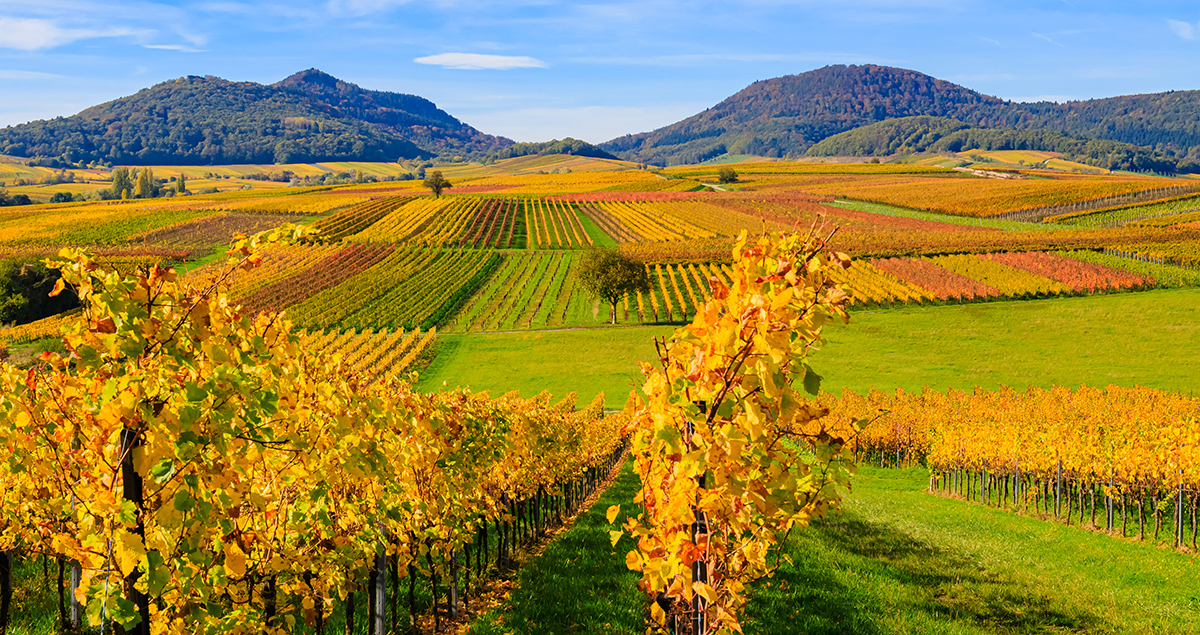
To understand how this is possible, we need to look deep beneath the region’s picturesque vineyard-covered landscape.
From wine to brine
Close to the French-German border, the town of Landau / Pfalz has long been at the heart of the area’s wine-making industry. The region is also home to the Upper Rhine Valley Brine Field, which is Europe’s largest lithium resource and, today, has placed it at the center of Europe’s EV push.
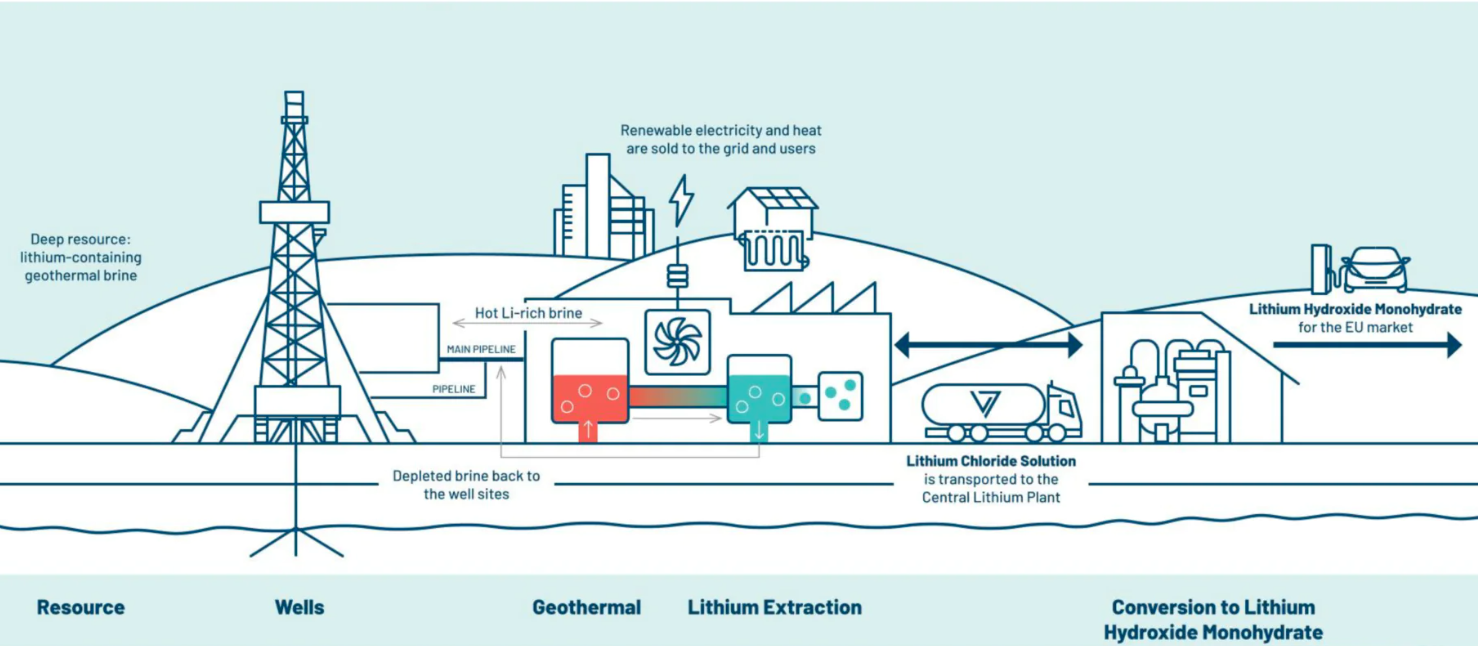
The integrated geothermal-lithium extraction plant planned there — part of renewables producer Vulcan Energy’s ambition to create a carbon-neutral EV supply chain in Europe — will use geothermal wells to access lithium-rich brine at depths of up to 5 kilometers.
The hot brine will be brought to the surface, where the lithium will be extracted before transportation to a plant. There it will be converted, via electrolysis, into lithium hydroxide monohydrate (LHM). The brine will then be returned to the subsurface and the LHM will be delivered to off-takers, including automaker Stellantis, owner of car brands including Citroën and Peugeot.
The extraction process is powered by renewable heat from the same geothermal wells. Excess renewable energy and heat are also generated, which will be sold to the grid and other users, including a local district heating system.
It’s a closed-loop system that promises to play a key role in decarbonizing battery-grade lithium production in Europe.
Zero-emissions innovation
The 32-Megawatt electrical plant will be built by a consortium created and represented by Turboden, a part of Mitsubishi Heavy Industries (MHI) Group and ROM Technik, a German construction company, part of the Zech Group.
The renewable electricity that powers the project will be generated using Turboden’s advanced Organic Rankine Cycle (ORC) technology, which will be optimized for the geothermal-lithium integration.
ORC technology is similar to a traditional steam turbine, but instead of using water vapor, the system vaporizes a special organic fluid, tailored to each project, to convert heat into power.
ORC turbines can use almost any source of heat, including geothermal, but also other renewables like biomass and solar, as well as traditional fuels, to generate both power and heat. They are an efficient technology that can use low- to mid-temperature heat sources, and as they are smaller than traditional power generation systems, they are ideal for distributed generation close to the point of use.
If the heat source is renewable or waste heat, no CO2 emissions are generated.
Thanks to this flexibility and energy efficiency, Turboden’s ORC technology has been used at more than 460 plants around the world, for everything from turning chicken litter waste from an egg farm into electrical power in Turkey to using geothermal energy to power a town in Bavaria.
In Landau, clean power will be produced as the heat from the geothermal brine vaporizes the organic fluid, which will then drive the turbine to create electricity. During the process, the geothermal water will be cooled to the precise temperature needed to extract the lithium, which has been dissolved in the water for thousands of years.
Geothermal application of Turboden’s Organic Rankine Cycle explained
Lithium: a strategic priority
The plant, which will produce 24,000 tonnes of lithium hydroxide a year, represents a milestone in Vulcan’s Phase One Lionheart Project, which also includes plans to build the Central Lithium Plant where the extracted lithium will be converted into a battery-grade product.
Lionheart has received European Union (EU)-level support that reflects its contribution to the EU’s green transition goals and to supporting the sustainable supply and processing of critical raw materials.
Currently, the continent relies on imports of battery-grade lithium from Australia, China and South America. But as its EV manufacturing sector continues to grow — against a backdrop of net zero commitments and the increasing need for energy security — building a lithium supply chain at home has become a strategic priority.
The global race to secure lithium has seen it dubbed as the ‘white gold of the energy transition’. Projects such as those in the Rhine Valley will be vital to Europe as it joins the rush.

Discover more about Turboden's Organic Rankine Cycle (ORC) technology
Related tags
SHARE


David Elliott
David Elliott has two decades’ experience working as a journalist, communications professional and content creator, including for some of the world’s biggest technology brands.
MHI endeavors to ensure all content published on Spectra is accurate and current at the time of publication; however, data and links are subject to change, and MHI accepts no responsibility for information that has since been updated or amended. For more information please refer to our Terms of use.