


Plugging Asia's data center power gap

Did you know that, after the northern US, Asia Pacific (APAC) is tipped to become the world’s next biggest data center hub?
Asia as a whole is set for “exceptionally robust” data center growth, recent research from Goldman Sachs forecasts. Analysts have highlighted that the boom is vital for economic growth in the region, with Deloitte going as far as saying it is critical for APAC’s economic future.
At the same time, nations are racing to balance this imperative with sustainability concerns — APAC accounts for 60% of global carbon emissions — and what is emerging as a significant obstacle to growth in the sector: power supply.
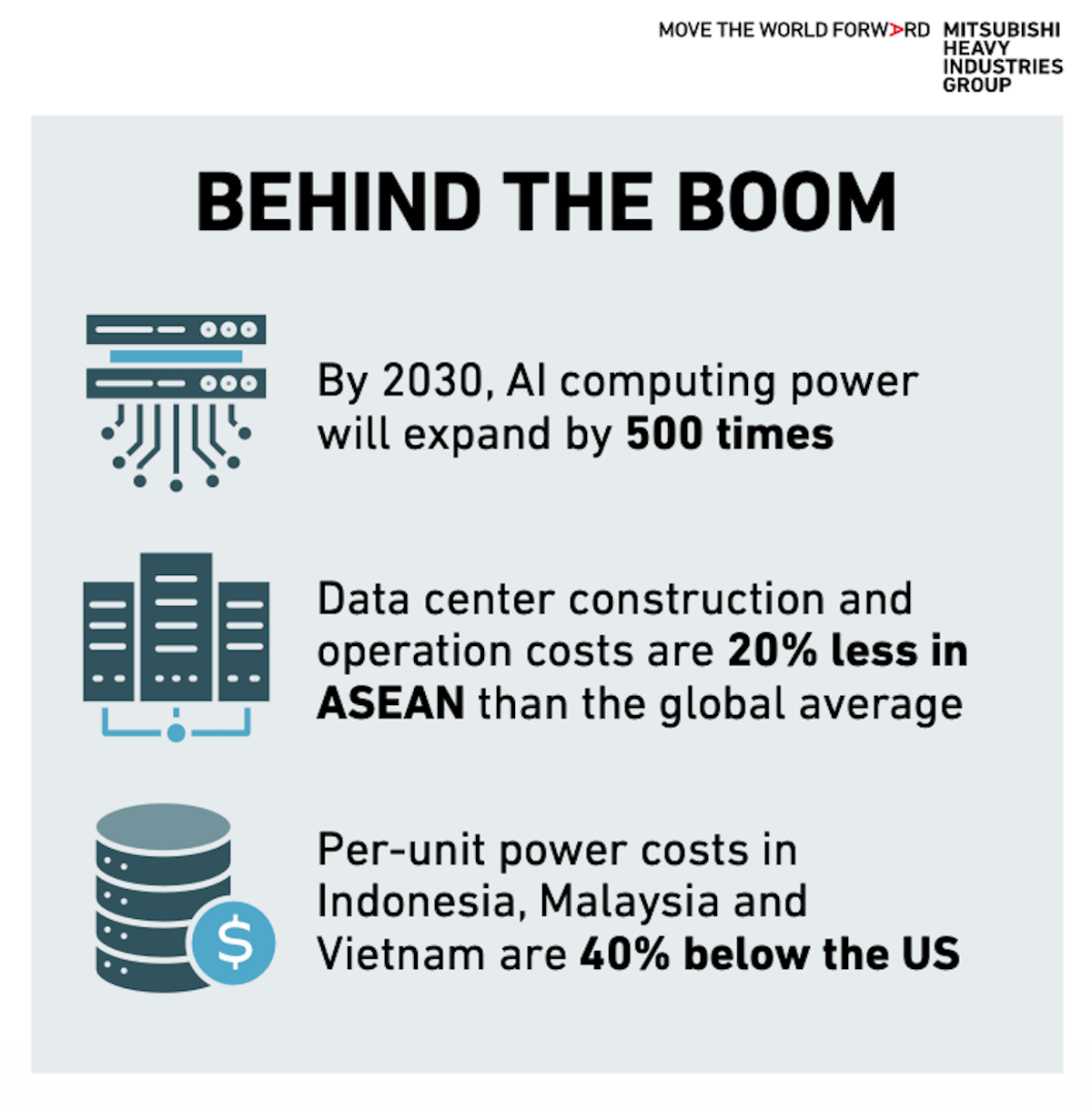
Why Asia’s data center market is growing
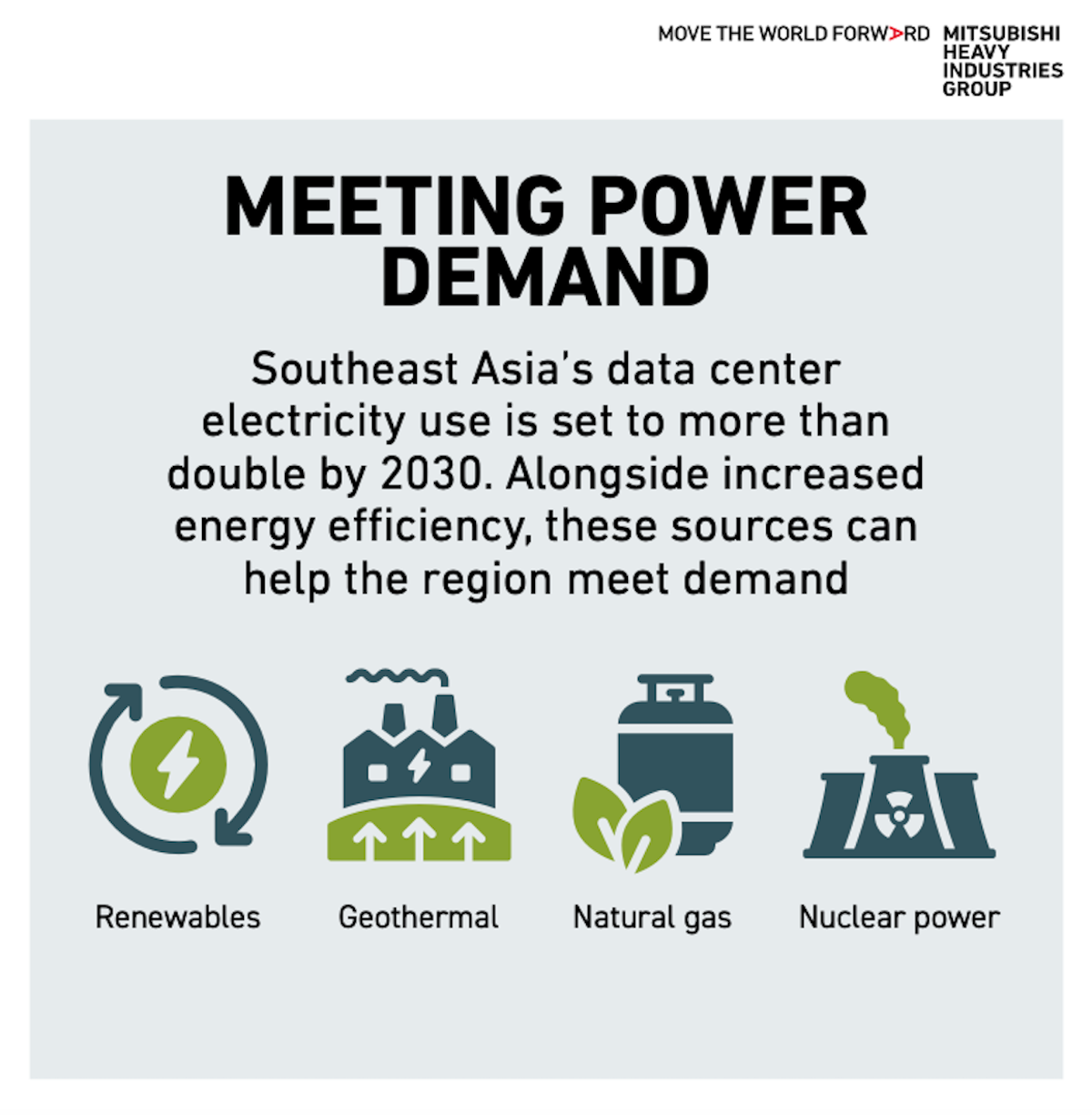
APAC’s electricity consumption is set to more than double by 2030, with about a third of that demand met by renewable energy. How to meet the rest of the demand is becoming a key question as AI, cloud and advanced digital services — alongside industrial expansion, urbanization and electrification — put increasing pressure on power systems.
The boom in data centers across Asia is being driven by a range of factors, from the need for space to build the huge facilities large-language models require, to cost advantages, sovereign data requirements, digital equity and more.
Countries from Indonesia to Malaysia and Singapore are seeing huge growth.
Balancing demand and decarbonization
Take Thailand, which hosted the 2026 edition of the Gastech conference, at which data center power supply was a key point of discussion. The country is rapidly emerging as a key data center and cloud location, with a market set to grow from around $1.45 billion now to over $6 billion by the early 2030s. Massive investment from hyperscalers, including Amazon and Google and tech companies like TikTok, is driving the growth.
Yet as the boom continues, the data center discussion is becoming more nuanced than “more equals better”. Reflecting the role digital infrastructure will play in economic growth and competitiveness, many governments in the region have lent strong support to the data center industry. But this support is evolving, with Thailand among the nations moving to ensure that developments provide measurable benefits to the economy while managing demands on electricity and water.
It is a picture playing out across Asia, with a recent ASEAN Centre for Energy report posing the question: “How can a region chasing decarbonization power this digital infrastructure boom without overheating the planet?”
Power is the ‘chief constraint’
Addressing that challenge — and realizing the opportunity — will be complex. The scaling of data center capacity will require navigating issues like resource use, while also taking in everything from infrastructure to social license and skills. But, as Goldman Sachs put it in its recent report on APAC’s data center growth, “power supply is perhaps the chief constraint” affecting construction timelines and delivery capabilities.
Despite accelerating investment in power generation across many countries in the region, operators often face grid bottlenecks. And they are facing increasingly complex regulation. As policymakers respond to surging power demand, they are introducing frameworks that require data center operators to share responsibility for grid reliability, flexibility and decarbonization, according to industry analyst Wood Mackenzie.
Public-private collaboration will be key to bridging the infrastructure gap, says Goldman Sachs.
A wide range of solutions
Technology will also form a key part of the solution, as delegates at Gastech — involving over 50,000 people, from energy ministers to industry representatives — discussed.
Improving the energy efficiency of facilities, through advanced cooling and more, is one part of the solution. Increased use of renewables, nuclear power and geothermal could also help the countries in the region meet demand, depending on their unique resources and challenges.
For example, Indonesia has some of the world’s richest geothermal resources — about 40% of global resources — but the technology is currently underused, with less than 10% of this potential being exploited.
Permitting issues or long timelines for some projects and intermittency associated with renewables mean that natural gas has a vital role, too, in helping nations meet near-term demand for the round-the-clock power data centers need.

The role of natural gas
Countries like Thailand are predicted to continue to rely on gas to meet the majority of data center power demand. And operators are increasingly exploring on-site, or ‘behind the meter’ gas generation facilities, as we have seen in the US.
Critics say this could risk extending the region’s reliance on fossil fuels. But natural gas emits a significantly lower amount of CO₂ than coal, and combined with carbon capture and storage (CCS), presents a scalable low-carbon path. The ASEAN Centre for Energy says CCS will have a crucial role across industries in meeting the power demand needed to fuel economic growth with clean energy, while not compromising energy security.
This critical role is emphasized by Akihiro Ondo, Asia Pacific Managing Director and CEO for Mitsubishi Power, a power solutions brand of Mitsubishi Heavy Industries (MHI), who took part in a panel discussion on the region’s energy and digital transitions at Gastech’s AixEnergy event. “In the near term, high-efficiency and flexible generation will remain important. Gas turbines can provide this reliable power at scale while progressively incorporating low-carbon fuels,” he says.
Looking to the future
Here, countries in the region are exploring facilities that will, in the future, be able to operate on hydrogen. For example, in Thailand, MHI and the nation’s largest power producer EGAT are studying hydrogen co-firing in existing gas turbine power plants to understand how existing assets can transition toward cleaner fuels.
Beyond gas turbines, the region will need a broader toolkit including battery storage, grid modernization, stronger transmission networks, interconnections and demand-side management to manage renewable variability and concentrated digital loads, Ondo adds.
The ASEAN Centre for Energy has described the amounts of energy needed to fuel the region’s rapid economic growth as “almost unimaginable”. The right mix of policy, collaboration and technology will help make it a reality.

Discover more about Advanced gas turbines
Related tags
SHARE


David Elliott
David Elliott has two decades’ experience working as a journalist, communications professional and content creator, including for some of the world’s biggest technology brands.
MHI endeavors to ensure all content published on Spectra is accurate and current at the time of publication; however, data and links are subject to change, and MHI accepts no responsibility for information that has since been updated or amended. For more information please refer to our Terms of use.