


Energy Explained: How virtual power plants can future-proof grids

Strings, woodwind, brass, percussion — different groups of instruments that when brought together by a conductor become a synchronized unit that’s much more than the sum of its parts: an orchestra.
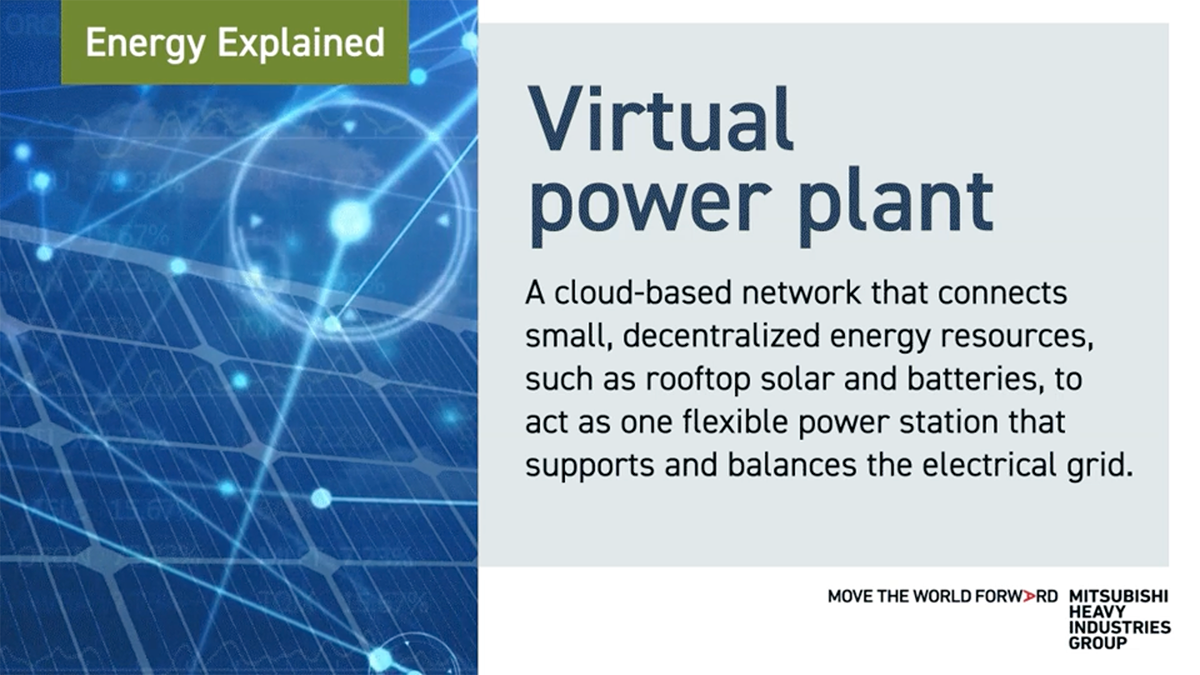
There’s a similar principle behind a virtual power plant (VPP), which links decentralized energy assets such as rooftop solar installations or electric vehicles (EVs) with digital technology to become a single, responsive power resource that can support and balance the electrical grid.
As more power sources are integrated into grids and demand grows, such digitally orchestrated networks of assets are beginning to play an important role in power generation — a role that only looks set to grow further.
How do VPPs work?
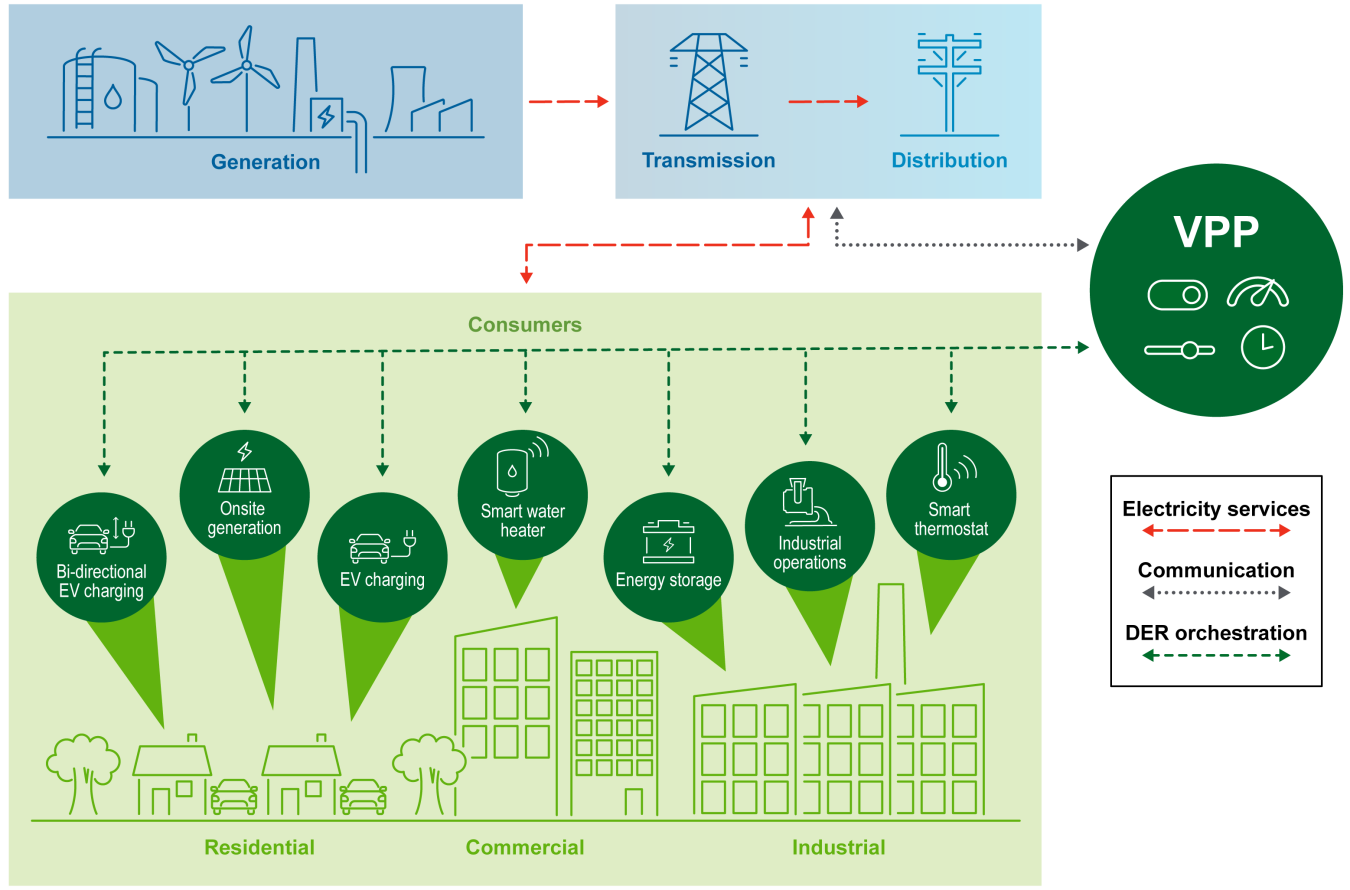
As the energy transition advances, increasing amounts of distributed energy resources (DERs) — small-scale energy resources that are usually situated near sites of electricity use — are being installed at homes and businesses across the globe.
These include generation technologies such as rooftop solar panels, distributed wind turbines, hydrogen fuel cells, microturbines and more.
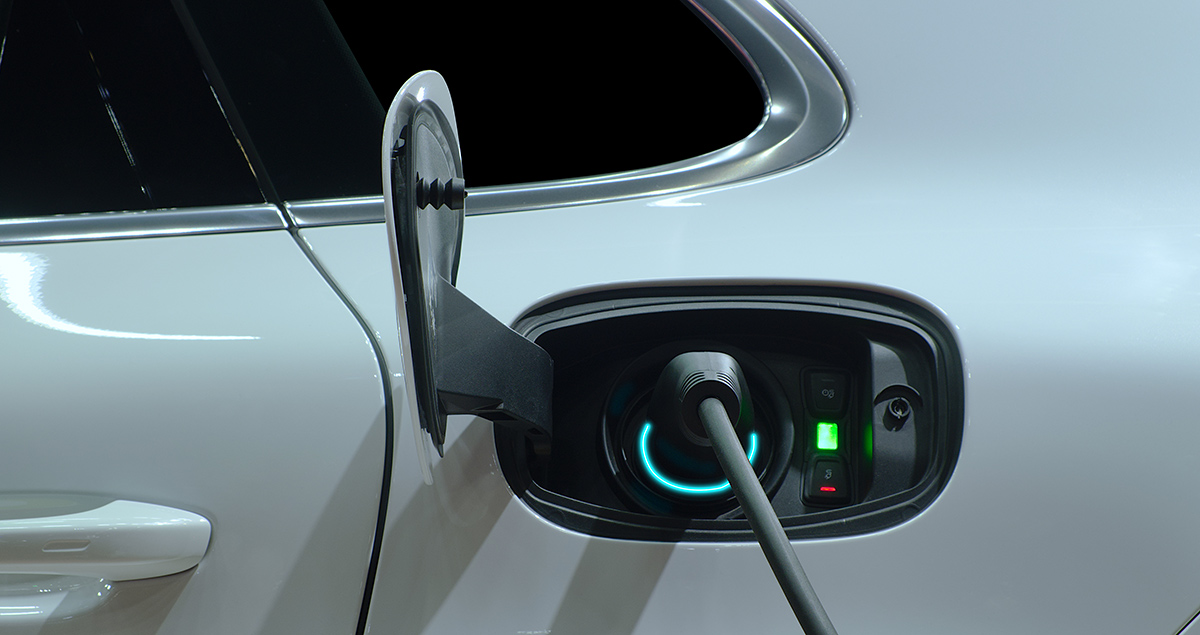
They also include energy storage technologies such as battery storage, electric vehicles (EVs), which can function as DERs when plugged into charging stations, and electric water heaters.
A VPP — which is often run by a local utilities company — aggregates many of these resources and links them through Internet of Things devices such as smart meters, cloud computing, algorithms and artificial intelligence (AI). This enables real-time monitoring and control of the system.
What are the benefits of VPPs?
VPPs can be built quickly and cost-effectively to control tens of thousands of devices at once, unlocking more available power and helping utilities make better use of existing grid infrastructure.
When demand surges on a hot evening, for example, a VPP can direct batteries to discharge, shift flexible consumption, or draw on other distributed resources. This helps keep supply and demand of electricity in balance without having to rely on a large conventional power station. In Puerto Rico, a VPP network of residential batteries connected to solar panels is helping to stabilize an aging power grid by dispatching power into the grid at times where there is a generation shortfall.
VPPs can also help make power bills more affordable, as well as provide direct benefits for participating businesses or consumers who can earn money or bill credits by sharing stored battery power during periods of high demand.
VPPs around the world
From Puerto Rico’s network to pilots in Brazil and Colombia, the potential of VPPs is being explored in regions across the globe.
In Europe, aggregators are combining renewable generators, industrial demand and residential assets to participate in power trading and balancing. The continent’s largest VPP boasts more than 10 GW installed capacity from over 1,000 power generators, which the operator says is equivalent to the output of multiple large thermal power plants and could power a major city.

In the UK, advanced data and machine learning are orchestrating more than 2 GW of flexible capacity across 500,000 devices including EVs, home batteries, heat pumps and solar systems, helping to flatten peak demand.
Governments from Australia to China and beyond are working to promote and support VPPs through new policies and incentives.
Growth in the US, for example, is backed by strong federal support, with the country’s Department of Energy (DoE) saying VPPs can make the grid more flexible, affordable, clean and resilient. Deploying 80-160 GW of VPPs, which would be enough to serve 10-20% of peak load, by 2030 could support rapid load growth while reducing overall grid costs, the DoE says.
VPPs and data centers
In parts of the US, there is another driver behind the trend: data centers. As data centers increase electricity demand and place greater strain on local grids, utilities are looking for resources that can respond quickly to changes in supply and demand. VPPs can help by adding fast, flexible capacity to meet rising demand from this sector.
US VPP capacity rose 13.7% in 2025 to 37.5 gigawatts, according to figures from energy analyst Wood Mackenzie. Two US electricity regions — in the Eastern US and in Texas — have the largest publicly reported VPP capacity; both regions are seeing rapid growth in data center infrastructure.
Partnerships between tech giants and residential solar and storage aggregators are becoming more commonplace. For example, residential solar company Sunrun, EV maker Tesla and energy management platform Renew Home have announced plans for a 16 GW VPP that draws on home batteries and smart devices to supply dispatchable capacity. Google and VPP operator Voltus, meanwhile, are collaborating to aggregate 100 MW of flexible assets to support regional utility capacity, with a VPP that will dial back power use or use stored energy when the grid becomes stressed.
The rise of ‘prosumers’
So VPP growth is, in the words of Wood Mackenzie, “getting very real”.
And while that growth faces hurdles including policy and regulatory issues and low public trust, the technology has been described as “particularly promising” by the International Energy Agency.
This potential is set to grow as more homes and businesses install DERs. One EU study estimates that more than 80% of EU households could become ‘prosumers’ — who both produce and consume electricity — by 2050.
The prospect of orchestrating these DERs to ensure more affordable, flexible and reliable power will be music to the ears of consumers, energy companies and governments alike.
Discover more on how MHI is working to realize the energy transition
Related tags
SHARE


David Elliott
David Elliott has two decades’ experience working as a journalist, communications professional and content creator, including for some of the world’s biggest technology brands.

MHI endeavors to ensure all content published on Spectra is accurate and current at the time of publication; however, data and links are subject to change, and MHI accepts no responsibility for information that has since been updated or amended. For more information please refer to our Terms of use.