


5 key storage technologies needed for the energy transition

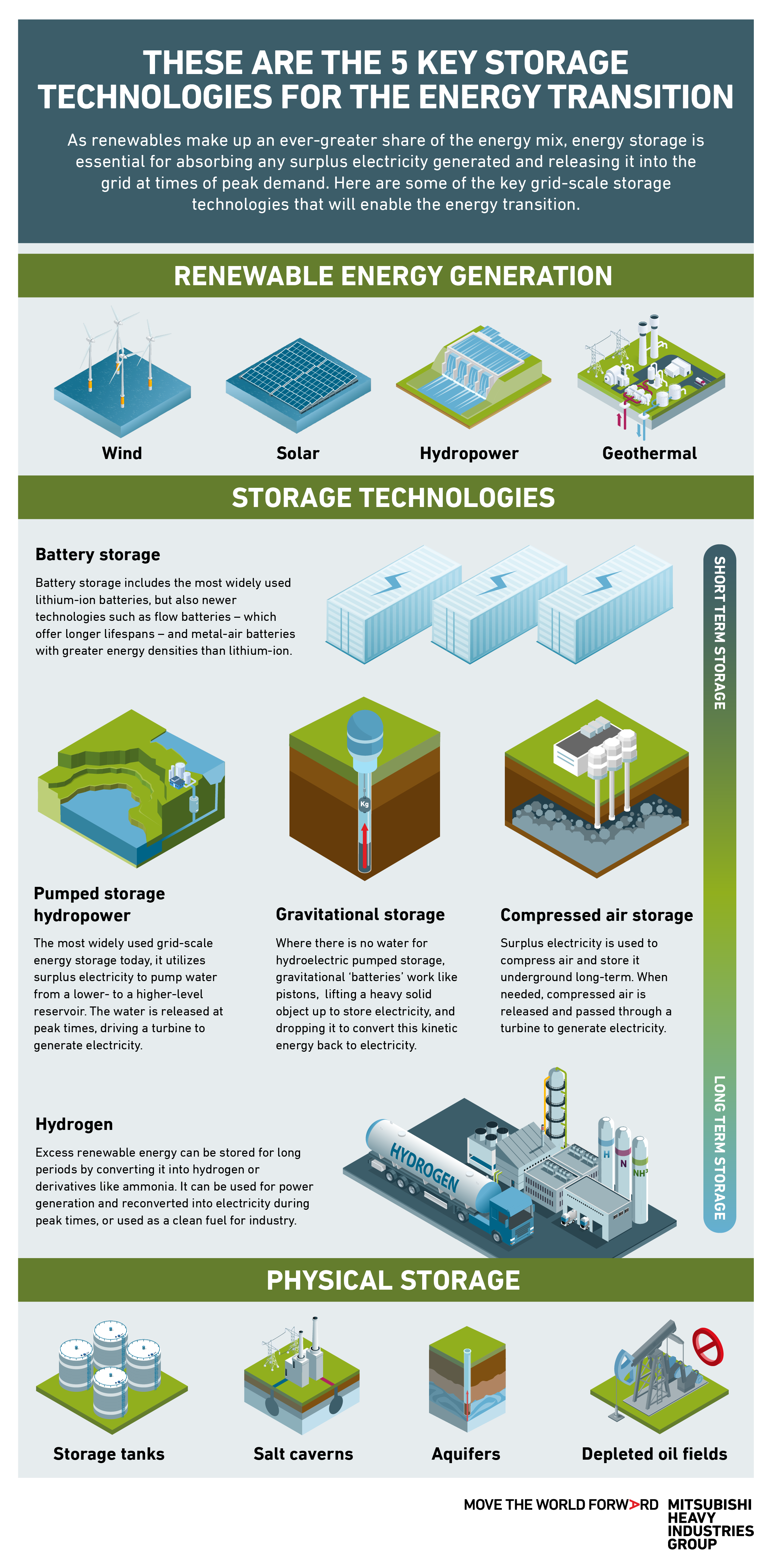
Along with renewable energy and low-carbon fuels, energy storage is viewed as vital for reaching net zero by 2050. Yet, grid-scale storage needs to grow significantly to ensure excess electricity generated at any time can be stored and fed back into the grid when demand exceeds supply.
Today, pumped hydro-storage is the most widely used energy storage technology. However, battery-electric storage systems are playing a growing part in grid-scale storage. With batteries now available for a tenth of their original cost compared to 15 years ago, they are becoming increasingly affordable for the power sector. In 2023, it accounted for more than 90% of overall battery demand, and use of batteries in the industry jumped up more than 130% year-on-year.
Batteries have the advantage that they can be used in a wide range of locations and scenarios, but energy storage is not a one-horse race. While batteries are only really suitable for short-term storage, hydrogen can be used to store energy for months or even years. It will take a mix of technologies, suited to a wide variety of geographies and applications, to provide dependable grid-scale storage for our net zero future.

Discover more about MHI’s work to help realize the energy transition.
Related tags
SHARE


Andrea Willige
Andrea Willige has spent many years creating content for the international business and technology press, working on behalf of some of the world’s largest technology companies.
MHI endeavors to ensure all content published on Spectra is accurate and current at the time of publication; however, data and links are subject to change, and MHI accepts no responsibility for information that has since been updated or amended. For more information please refer to our Terms of use.